
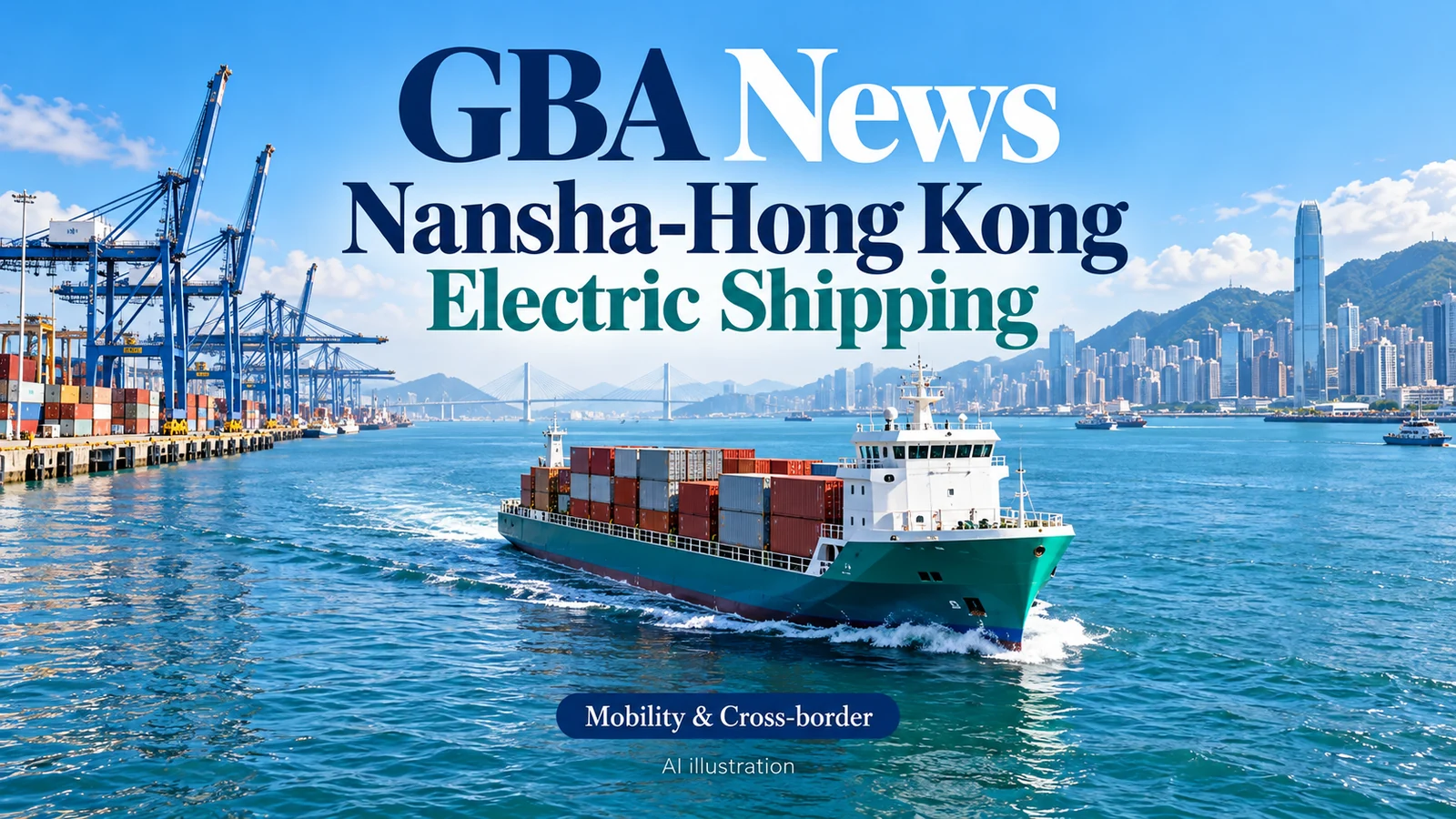
A battery-powered container route connecting Nansha and Hong Kong began operating on 13 October, according to a Nansha Maritime Safety Administration report published on 16 October. Its projected carbon savings are official estimates, not independently verified lifecycle results.
At a glance
- The reported launch took place on 13 October at Nansha Port Phase III; the official account was published on 16 October.
- Sui Gang Dian Hang 02 sailed from Nansha to Hongkong International Terminals with Guangdong-made furniture and daily-use goods.
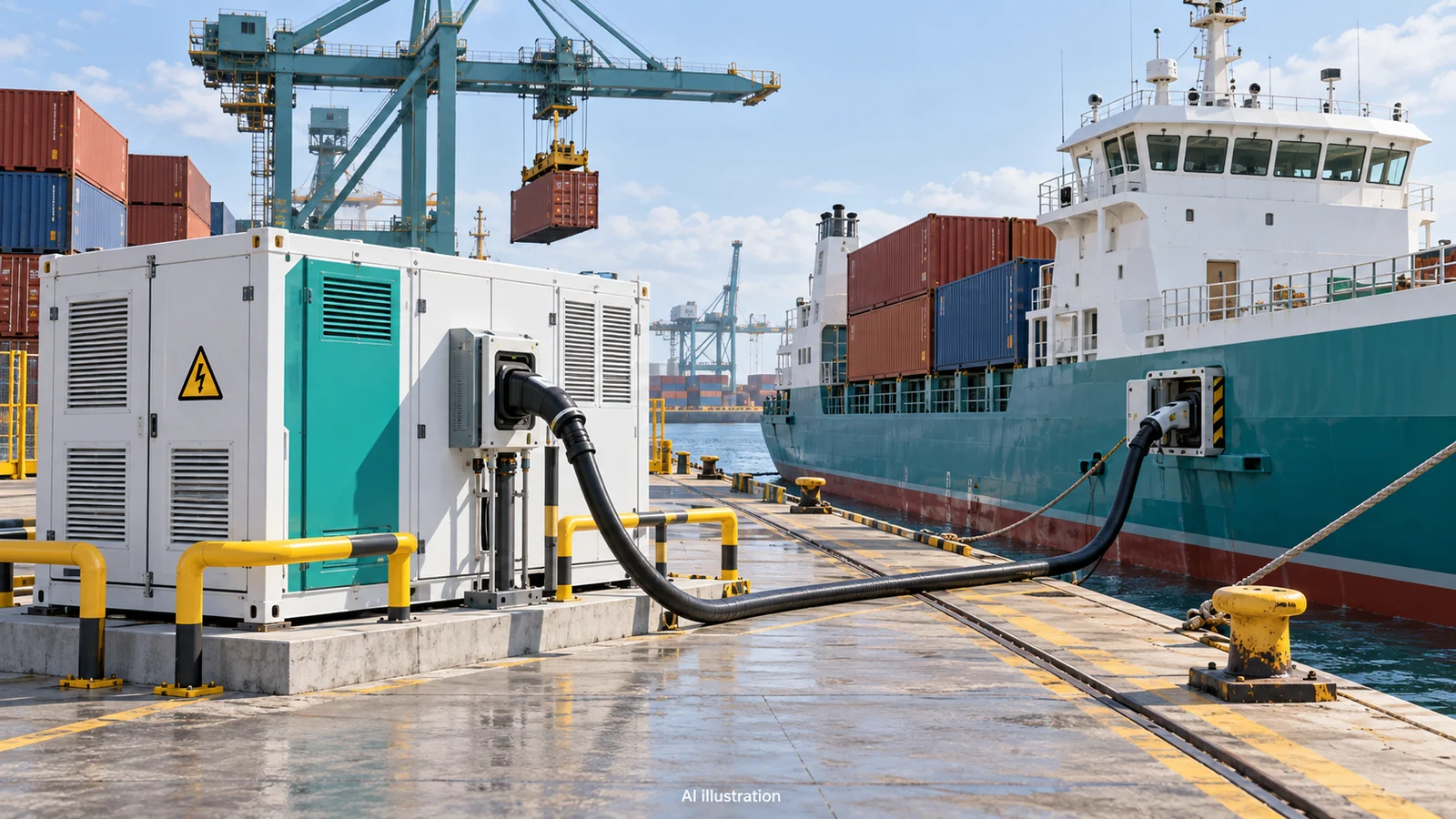
- The report describes 240-TEU vessels using containerised batteries that can be charged or exchanged.
- The stated annual saving of more than 550 tonnes of carbon dioxide per vessel is a projection; the report does not establish full lifecycle emissions.
A new electric freight connection
Nansha Maritime Safety Administration's account describes a Guangzhou-Hong Kong electric container service inaugurated at Nansha's Phase III terminal. The vessel Sui Gang Dian Hang 02 carried Guangdong-produced cargo towards Hong Kong. The report presents the service as the first zero-carbon container route between Guangzhou and Hong Kong. That description is attributed to the official source; GBA News has not independently audited the first-route claim or the service's emissions.
Battery operation is not a complete carbon account
The report's annual carbon-saving estimate should be read alongside its operating boundary. A vessel can avoid combustion exhaust during a battery-powered voyage without establishing that electricity production, battery manufacture, port handling and every other activity are emissions-free. The source does not provide enough methodology to reproduce a complete lifecycle calculation. A customer needing a formal emissions comparison should request the operator's measurement boundary and underlying figures rather than treating a promotional label as a verified certificate.
What shippers still need to ask
Practical interpretation: a manufacturer or freight customer should confirm sailing frequency, booking arrangements, cargo cut-off times, container limits, handling charges and the precise terminals used. Those details are not supplied by the launch account, and this article does not present a timetable or a freight quotation. Ask whether the service fits the shipment's delivery window and whether any onward movement is included in the proposed price. A launch announcement alone cannot establish availability for a particular consignment.
Container capacity does not equal a booking guarantee
The stated 240-TEU capacity describes a vessel characteristic, not the space remaining on a future sailing. TEU is a container-capacity unit, so a reader should not convert it directly into a fixed number of customer shipments without checking equipment sizes and operating constraints. Exporters also need the applicable cargo and documentation requirements confirmed through their established freight partners. The route is a container-freight development, not a newly announced passenger crossing.
A practical learning case for young logistics professionals
For students and early-career readers, the project offers a way to frame questions about electrification across a working transport chain. Relevant subjects include energy planning, port coordination, cargo scheduling and the distinction between measured performance and projected savings. This is editorial context, not an announcement of training places, vacancies or a subsidy. A useful portfolio exercise would clearly separate figures obtained from the official report, assumptions made by the reader and evidence still needed from an operator.
Watch for operating evidence after the launch
A stronger assessment will require service information and performance data beyond the inauguration. Readers can watch for published operating arrangements, independently checkable energy figures and clear explanations of what a carbon comparison includes. For now, the verified news is that the official authority has reported the route's start and described its battery-based approach. The launch date remains 13 October; today's coverage does not repackage it as a new event occurring on publication day.
Sources and image disclosure
Guangzhou-Hong Kong zero-carbon container route opens at Nansha Phase III terminal
Reporting is based on the linked official sources, with announcement dates and event dates distinguished in the article. Practical interpretation is editorial analysis, not an additional official promise. Sources were reviewed on 20 October 2026. The cover and contextual image are AI-generated editorial illustrations, not documentary photographs.