
Hong Kong has reached settlements with MTR Corporation over the Express Rail Link and Sha Tin to Central Link, including a HK$2.25 billion payment for XRL delay claims.
At a glance
- MTR Corporation will pay HK$2.25 billion to settle XRL delay claims.
- The corporation had already shouldered about HK$2.8 billion in SCL project-management and quality costs.
- The Government says newer railway projects now use strengthened governance, monitoring and cost controls.
What the XRL settlement covers
The settlement resolves claims connected with delay to the Guangzhou-Shenzhen-Hong Kong Express Rail Link project, with MTR Corporation paying HK$2.25 billion. A settlement ends the defined dispute on agreed terms; it should not be read as a new fare subsidy, passenger compensation scheme or change to current train operations.
The Sha Tin to Central Link position
The official release says MTR Corporation had shouldered about HK$2.8 billion in project-management and quality costs for the Sha Tin to Central Link. The parties agreed there would be no further delay claims for that project. Readers should separate the settlement figures from the total capital cost, which is a different accounting question.
Why governance matters to passengers
Rail construction decisions eventually affect network capacity, disruption and public confidence, even when settlement documents do not change a timetable. The Government points to strengthened governance, monitoring and cost controls for newer projects. The useful test will be whether milestones, risks and changes are disclosed early enough for accountable decisions.
Cross-border rail context
The XRL connects Hong Kong with the mainland high-speed rail network and supports journeys to Guangzhou, Shenzhen and destinations beyond the GBA. Current passengers still need to check tickets, immigration documents and station arrangements. A historical project settlement does not alter border eligibility or guarantee service during weather, maintenance or holiday peaks.
What to watch next
Future evidence should include how lessons from the two projects shape procurement, independent assurance, contingency control and public reporting. New rail proposals pass through separate planning and approval stages. An announced corridor or study is not an approved opening date, and property or business decisions should not rely on an unconfirmed transport milestone.
How to read this development
Cross-border mobility depends on operating dates, checkpoints, documents, booking rules and real-time conditions. Travellers should confirm the latest authority notice before departure. GBA News separates the source date, event or policy date and actual publication date so an older official development is not presented as a new event.
The wider Greater Bay Area context
A Greater Bay Area lens should not flatten different cities into one system. Hong Kong and Macao retain their own legal and immigration arrangements, while mainland GBA cities operate through their respective provincial and municipal authorities. Readers should separate a regional signal from the rule applying to a particular journey, application, employer or transaction. Compare the official owner, effective date, eligible location and evidence required before acting. Where a notice points to future implementation, the next verification step is the named operating document, registration channel or service timetable rather than an assumption that access is already available across all 9+2 cities.
A practical next step
Build the journey end to end, including departure point, operating period, checkpoint, onward transport and return. Allow a buffer during holidays and separate transport availability from each traveller's immigration eligibility.
Our source standard
GBA News reviewed the named official publication and kept its figures, dates and qualifications attached to that source. We have not converted an announced plan into an open application, a selected cohort into a payment, or an organiser's result into an independent guarantee. Public arrangements can change after publication, so readers should check the authority's current page before spending money, submitting personal information or beginning a journey.
About the cover
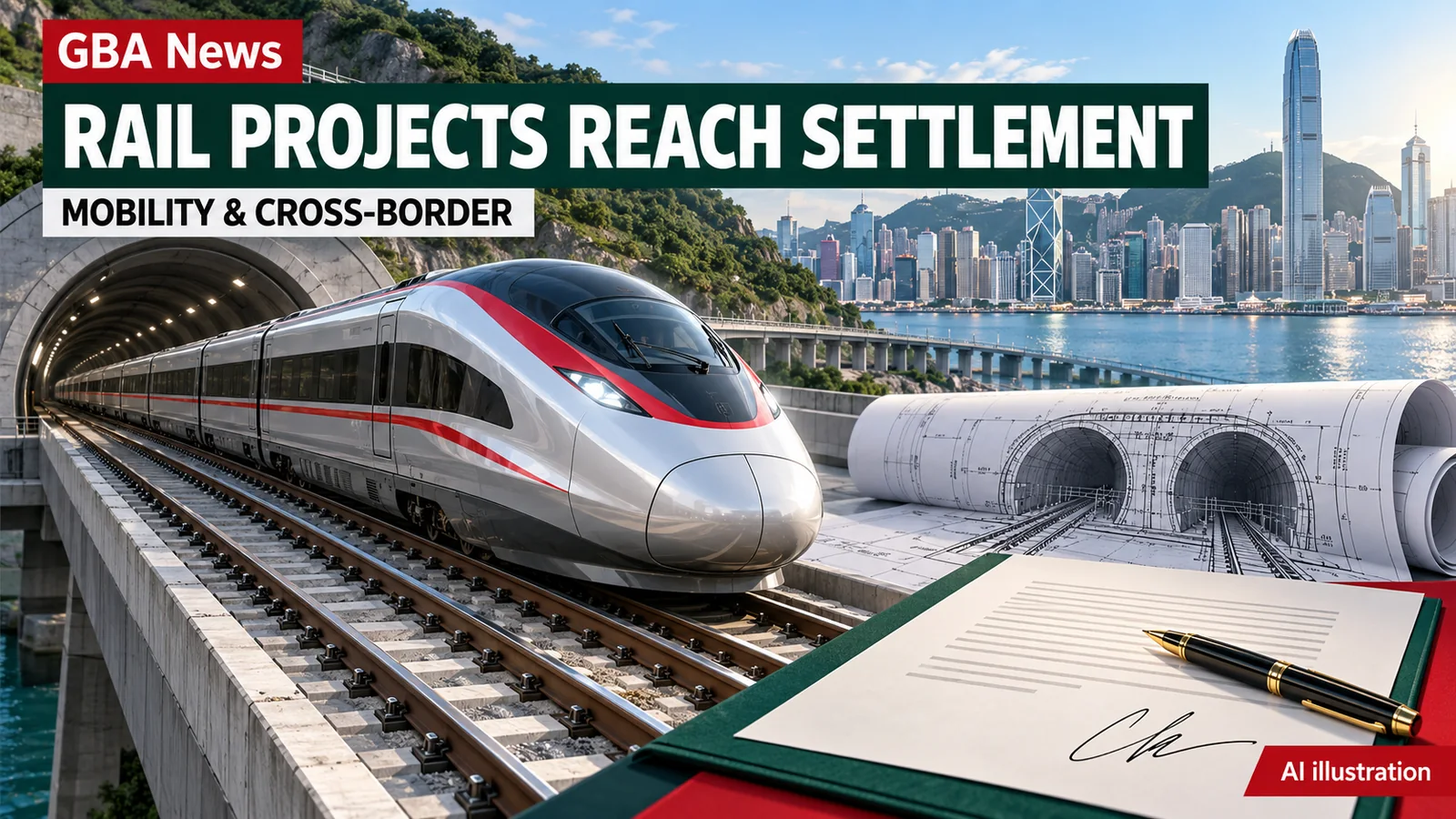
The cover is an AI-generated editorial illustration, not documentary evidence. It uses an article-specific object, infrastructure element or relevant scene rather than defaulting to a generic youth portrait. Reporting authority comes only from the linked primary source and attributed facts.
Official source
Read the Government and MTR Corporation reach XRL and SCL settlements. The linked authority remains the source of record for operational changes, deadlines and eligibility.