
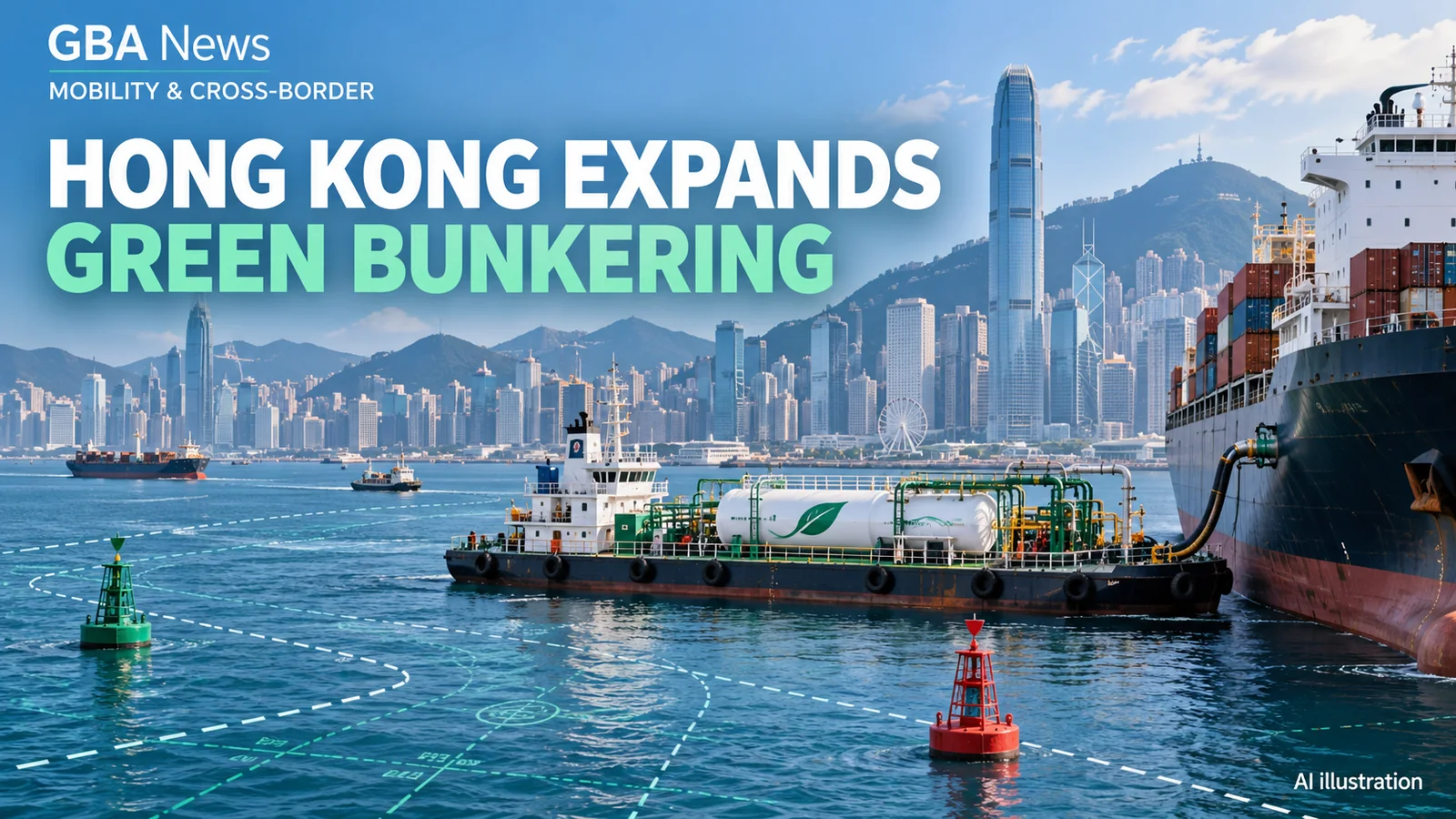
Hong Kong plans to expand designated anchorage sea room from 645 to 2,877 hectares as part of legislative changes supporting green maritime fuel bunkering and port efficiency.
At a glance
- Designated anchorage sea room is set to increase from 645 to 2,877 hectares.
- The changes include seven new anchorages and adjustments to eight existing ones.
- Six pieces of subsidiary legislation are due for negative vetting at the Legislative Council on 7 October.
A larger operating footprint
The proposed changes substantially expand the sea area available for anchorage and reorganise designated locations. Seven new anchorages would be added, eight adjusted, three converted, two repealed and two traffic separation schemes formalised. Legal designation creates operating capacity, but individual bunkering activity still depends on approvals, fuel type and safety procedures.
Why green bunkering matters
Shipping is testing lower-carbon fuels and new supply chains as emissions rules tighten. A port able to bunker multiple fuels may remain competitive, but each fuel brings different storage, handling and emergency risks. The label green does not remove lifecycle emissions questions, and the environmental case should be assessed by fuel pathway and verified data.
Navigation and safety
Anchorages, traffic separation and mooring arrangements shape how vessels wait and move through busy waters. Expanding sea room must be matched by clear charts, notices, pilotage and incident response. Recreational and smaller craft operators should use current marine notices rather than assuming that familiar routes remain unchanged after legislation takes effect.
The legislative stage
The amendments are scheduled for submission to the Legislative Council on 7 October under negative vetting. That is a defined legal process, not the same as immediate commencement of every operational change. Shipping companies should follow the gazetted effective dates and Marine Department instructions before updating voyage or bunkering plans.
A GBA port-network perspective
Hong Kong operates within a dense GBA port and logistics network that includes Shenzhen, Guangzhou and other terminals. Green-fuel infrastructure can support regional shipping, but ports may specialise in different fuels, vessel types and services. Operators should compare availability, standards, cost and diversion risk rather than assuming one arrangement applies across the estuary.
How to read this development
Cross-border mobility depends on operating dates, checkpoints, documents, booking rules and real-time conditions. Travellers should confirm the latest authority notice before departure. GBA News separates the source date, event or policy date and actual publication date so an older official development is not presented as a new event.
The wider Greater Bay Area context
A Greater Bay Area lens should not flatten different cities into one system. Hong Kong and Macao retain their own legal and immigration arrangements, while mainland GBA cities operate through their respective provincial and municipal authorities. Readers should separate a regional signal from the rule applying to a particular journey, application, employer or transaction. Compare the official owner, effective date, eligible location and evidence required before acting. Where a notice points to future implementation, the next verification step is the named operating document, registration channel or service timetable rather than an assumption that access is already available across all 9+2 cities.
A practical next step
Build the journey end to end, including departure point, operating period, checkpoint, onward transport and return. Allow a buffer during holidays and separate transport availability from each traveller's immigration eligibility.
Our source standard
GBA News reviewed the named official publication and kept its figures, dates and qualifications attached to that source. We have not converted an announced plan into an open application, a selected cohort into a payment, or an organiser's result into an independent guarantee. Public arrangements can change after publication, so readers should check the authority's current page before spending money, submitting personal information or beginning a journey.
About the cover
The cover is an AI-generated editorial illustration, not documentary evidence. It uses an article-specific object, infrastructure element or relevant scene rather than defaulting to a generic youth portrait. Reporting authority comes only from the linked primary source and attributed facts.
Official source
Read the Legislative amendments support green maritime fuel bunkering. The linked authority remains the source of record for operational changes, deadlines and eligibility.