
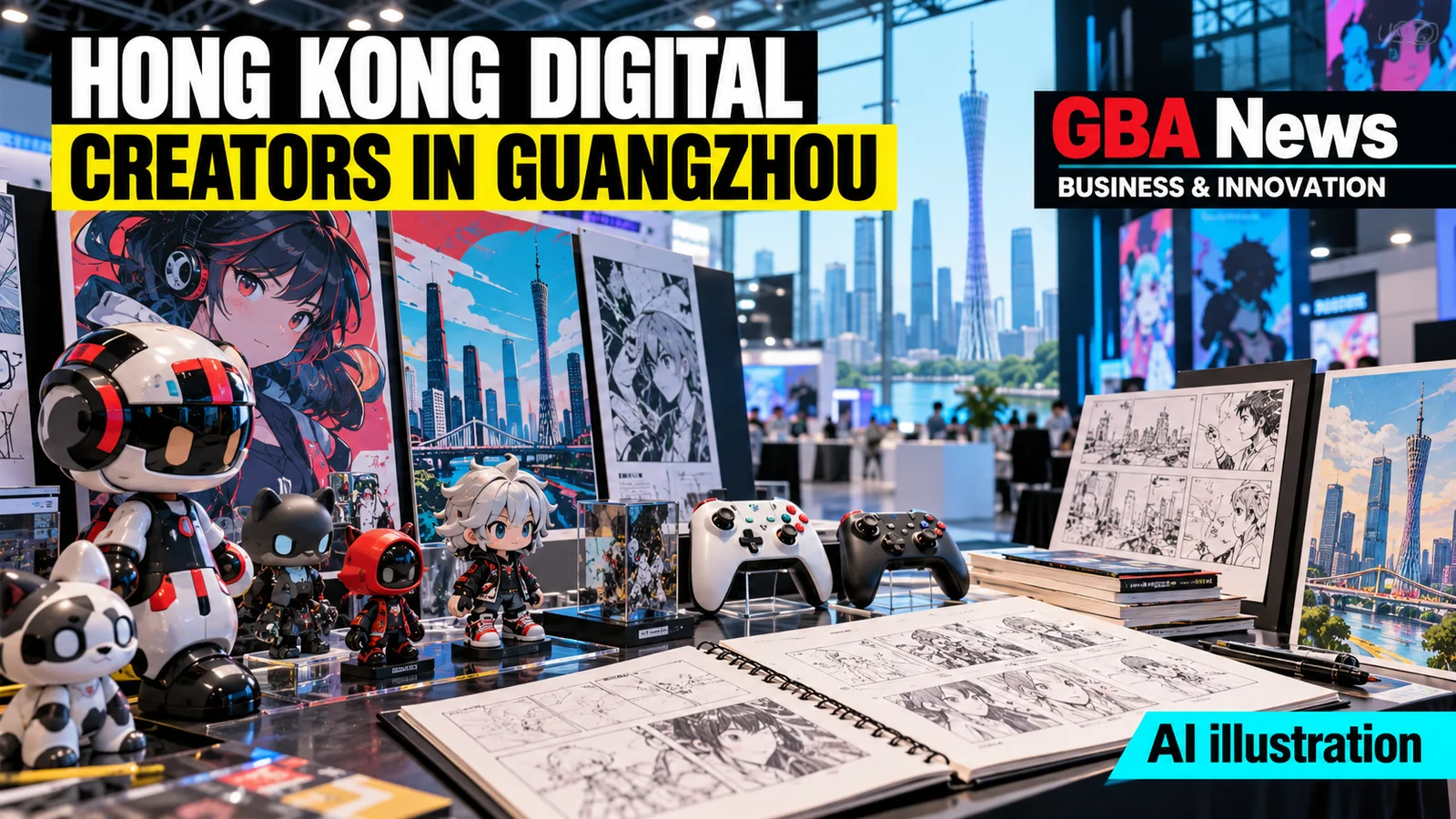
Sixteen Hong Kong digital-entertainment companies are presenting games, animation, comics and art toys at Guangzhou's CICF Expo from 2 to 5 October.
At a glance
- The Hong Kong Pavilion features 16 companies from 2 to 5 October.
- Displays cover art toys, games, animation and comics.
- Organisers expect more than 1,000 brands, over 7,000 merchandise types and 450,000 visits or engagements.
A cross-border creative showcase
The Cultural and Creative Industries Development Agency sponsored the delegation organised through the Hong Kong Digital Entertainment Association. The pavilion brings several creative formats together rather than presenting games or animation in isolation. Participation gives companies market exposure, but it does not establish sales, licensing agreements or audience conversion without transaction-level evidence.
What the pavilion includes
The official release names art toys, games, animation and comics, along with a smart guide system used at the pavilion for the first time. These formats share intellectual-property and distribution challenges but have different production cycles and revenue models. Visitors should distinguish a finished product, prototype, licensing property and promotional concept when discussing partnerships.
The scale of CICF Expo
The event is expected to involve more than 1,000 brands and over 7,000 merchandise types, with 450,000 visits or engagements. Those are organiser expectations rather than independently verified final attendance or sales. Companies should measure useful meetings, qualified leads and completed follow-up rather than treating footfall as a substitute for commercial outcome.
Opportunities for young creators
A major expo can help students and early-career creators understand how original work becomes a product, game, series or licensed character. The practical lessons include ownership, portfolio presentation, manufacturing, localisation and audience testing. An expo appearance is not a recruitment offer, and creators should verify any contest, internship or licensing proposal through the named organisation.
Protecting creative rights
Teams should keep dated ownership records, contributor agreements and approved brand assets before presenting work publicly. Any licensing discussion should identify territory, media, term, exclusivity, approval rights and payment structure. Cross-border exposure can expand a market, but it also increases the need for clear intellectual-property and data-handling controls.
How to read this development
For founders, employers and investors, a development matters most when it changes access to technology, capital, markets or talent. Policy and trade signals provide context but never replace transaction-level due diligence. GBA News separates the source date, event or policy date and actual publication date so an older official development is not presented as a new event.
The wider Greater Bay Area context
A Greater Bay Area lens should not flatten different cities into one system. Hong Kong and Macao retain their own legal and immigration arrangements, while mainland GBA cities operate through their respective provincial and municipal authorities. Readers should separate a regional signal from the rule applying to a particular journey, application, employer or transaction. Compare the official owner, effective date, eligible location and evidence required before acting. Where a notice points to future implementation, the next verification step is the named operating document, registration channel or service timetable rather than an assumption that access is already available across all 9+2 cities.
A practical next step
Start with the primary document. Identify the eligible applicant, technical standard, submission window and financial commitment. Test relevance to the company's own supply chain instead of treating a policy signal as approval or guaranteed savings.
Our source standard
GBA News reviewed the named official publication and kept its figures, dates and qualifications attached to that source. We have not converted an announced plan into an open application, a selected cohort into a payment, or an organiser's result into an independent guarantee. Public arrangements can change after publication, so readers should check the authority's current page before spending money, submitting personal information or beginning a journey.
About the cover
The cover is an AI-generated editorial illustration, not documentary evidence. It uses an article-specific object, infrastructure element or relevant scene rather than defaulting to a generic youth portrait. Reporting authority comes only from the linked primary source and attributed facts.
Official source
Read the Hong Kong digital entertainment industry promoted at CICF Expo in Guangzhou. The linked authority remains the source of record for operational changes, deadlines and eligibility.