
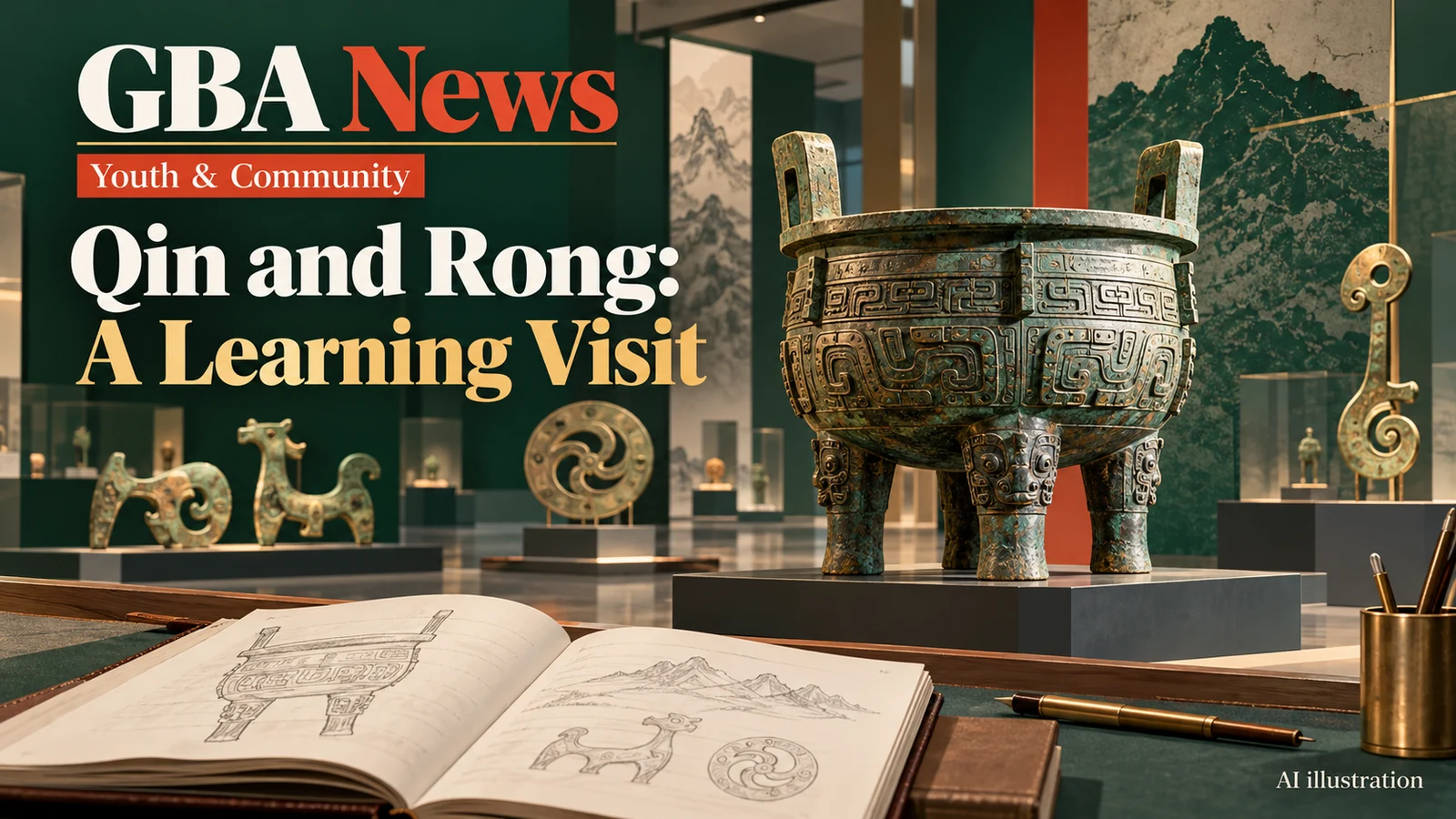
A newly opened exhibition at Shenzhen Museum's Tongxin Road branch gives students and families a reason to explore early Qin and Rong history, with a run continuing into February 2027.
At a glance
- Opened on 28 October 2026; the announced exhibition end date is 28 February 2027.
- Venue: Shenzhen Museum Tongxin Road (Ancient Art), in Futian district.
- The exhibition brings together 182 objects or sets, including 25 classified as first-grade cultural relics.
A new exhibition, not a new opening today
The municipal culture bureau's 29 October report places the opening on 28 October. The display examines early Qin and Xirong interactions around the Guanshan region, drawing on archaeological discoveries in Gansu. Its four sections move through coexistence, conflict and peace, integration and unification. These are descriptive English renderings, not verified official English gallery titles. The museum and two Gansu research and museum institutions organised the exhibition.
Read the object label before the story
One highlighted display is a reconstruction of the M15-1 Majia Yuan noble's carriage, accompanied by original ornaments from the same cemetery. Calling the whole carriage an intact ancient vehicle would therefore be misleading. Other exhibits include bronze ritual vessels, a blue-glazed pottery cup and bamboo slips. For a young visitor, distinguishing an excavated object from a reconstruction is a useful first exercise in reading museum evidence.
Three questions for a learning visit
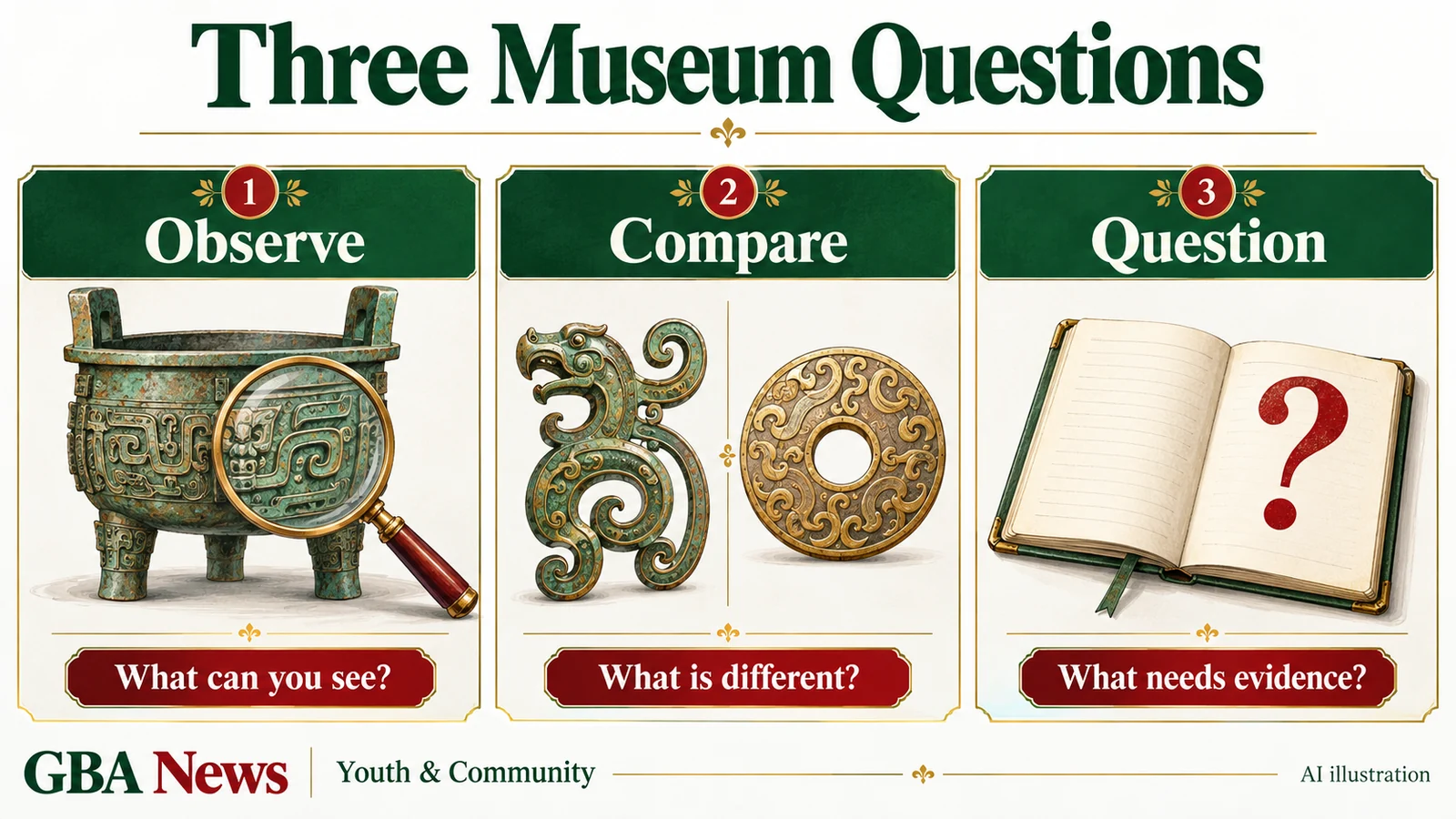
GBA News suggests a simple notebook approach: observe, compare and question. Start with one object rather than trying to record every case. Describe its shape and material before proposing a use. Then compare it with a second object and note which differences are visible and which depend on the accompanying explanation. Finally, write one question that the objects alone cannot answer. This separates observation from interpretation and gives a later classroom discussion something concrete to test. It is an editorial activity suggestion, not a museum-run workshop or an accredited learning programme.
Plan for the correct branch
The museum's English visitor-service page gives the Ancient Art branch address as 6 Tongxin Road, Futian, with access from Honglingnan station Exit A on Line 9 or Science Museum station Exit A on Lines 1 and 6. It describes general admission as free and not requiring advance reservation, subject to security screening. Those general arrangements should not be mistaken for confirmation of an exhibition-specific guided tour. Official pages disagree on whether this branch opens at 09:00 or 10:00; both list Monday closure. Check the museum's latest branch notice before travelling, particularly for a morning visit or a holiday.
Keep the learning claim modest
For Greater Bay Area families, this is a cultural visit in Shenzhen, not a cross-border youth exchange entitlement. Before organising a group trip, agree on a manageable question, allow time to read labels, and decide how students will record what they learned. A short comparison written afterwards can be more useful than a long list of photographed objects. This report does not verify an open school-booking programme, guaranteed guide availability, transport subsidy or student credit. Its practical value is a current exhibition to investigate and a transparent way to approach the evidence.
Sources and image disclosure
Municipal culture bureau exhibition report, 29 October 2026 (Chinese)
Shenzhen government exhibition listing (Chinese)
Shenzhen Museum visitor service (English)
Municipal museum directory, 28 January 2026 (Chinese)
Sources checked on 1 November 2026. This is source-led reporting, not an on-site review. The cover and contextual image are AI-generated editorial illustrations of imagined objects, not documentary photographs or verified replicas of exhibits.