
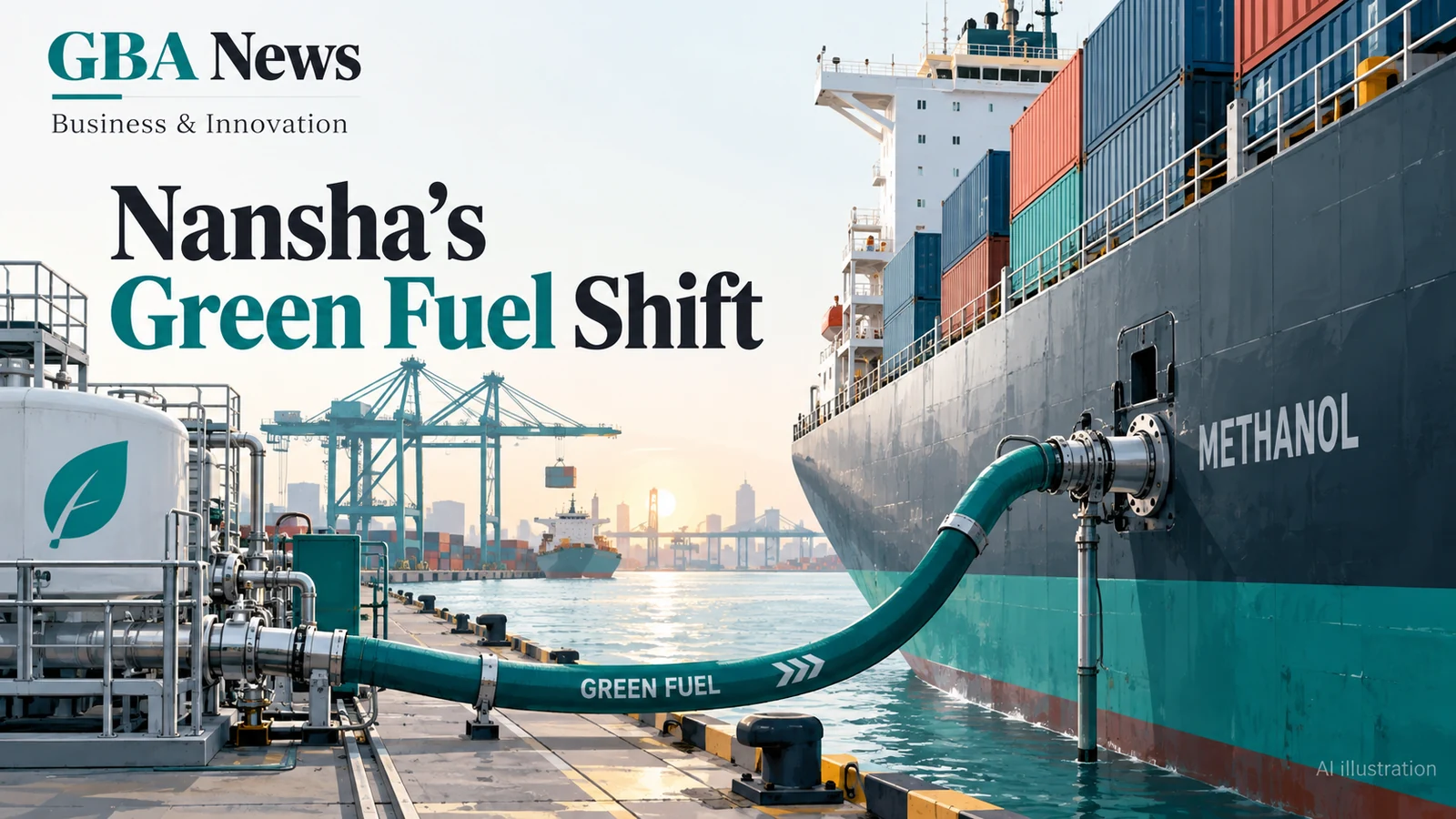
An 8 October Nansha commerce update describes a late-September methanol supply operation at Guangzhou Port. The report offers a concrete logistics example while leaving lifecycle emissions and commercial terms outside the evidence available here.
At a glance
- The update concerns an operation on 28 September, not a new operation today.
- Daqing 268 supplied 300 tonnes of green methanol to a COSCO Shipping vessel.
- The official account describes quayside bunkering alongside cargo work.
- Green-fuel terminology is not proof of zero emissions across a supply chain.
A recent report of an earlier operation
The Nansha Commerce Bureau's 8 October update recounts a 28 September supply of 300 tonnes of green methanol by Daqing 268 to COSCO Shipping Carnation. It calls this Guangzhou Port's first quayside green-methanol bunkering conducted alongside cargo operations. That first-operation description is attributed to the bureau. The event date is kept explicit rather than being recast as today's activity.
Why the operational combination matters
The update places the methanol operation within a broader account of alternative marine-fuel services, including LNG and biofuel oil. It describes different vessel and service arrangements. This shows the scope the port is presenting, but does not establish a universal fuel offer, a price, or an emissions result for every ship. An operational capability and a customer-specific commercial agreement remain distinct.
Practical analysis: ask about the fuel chain
A sustainability claim becomes more useful when the buyer can examine its boundaries. The production route, transport, certification and actual use of a fuel can all affect how a statement should be understood. Readers should not turn the word green into an unsupported zero-carbon conclusion. This article does not calculate a lifecycle reduction or verify a certificate; neither figure is supplied by the evidence reviewed here.
Port development is also a skills story
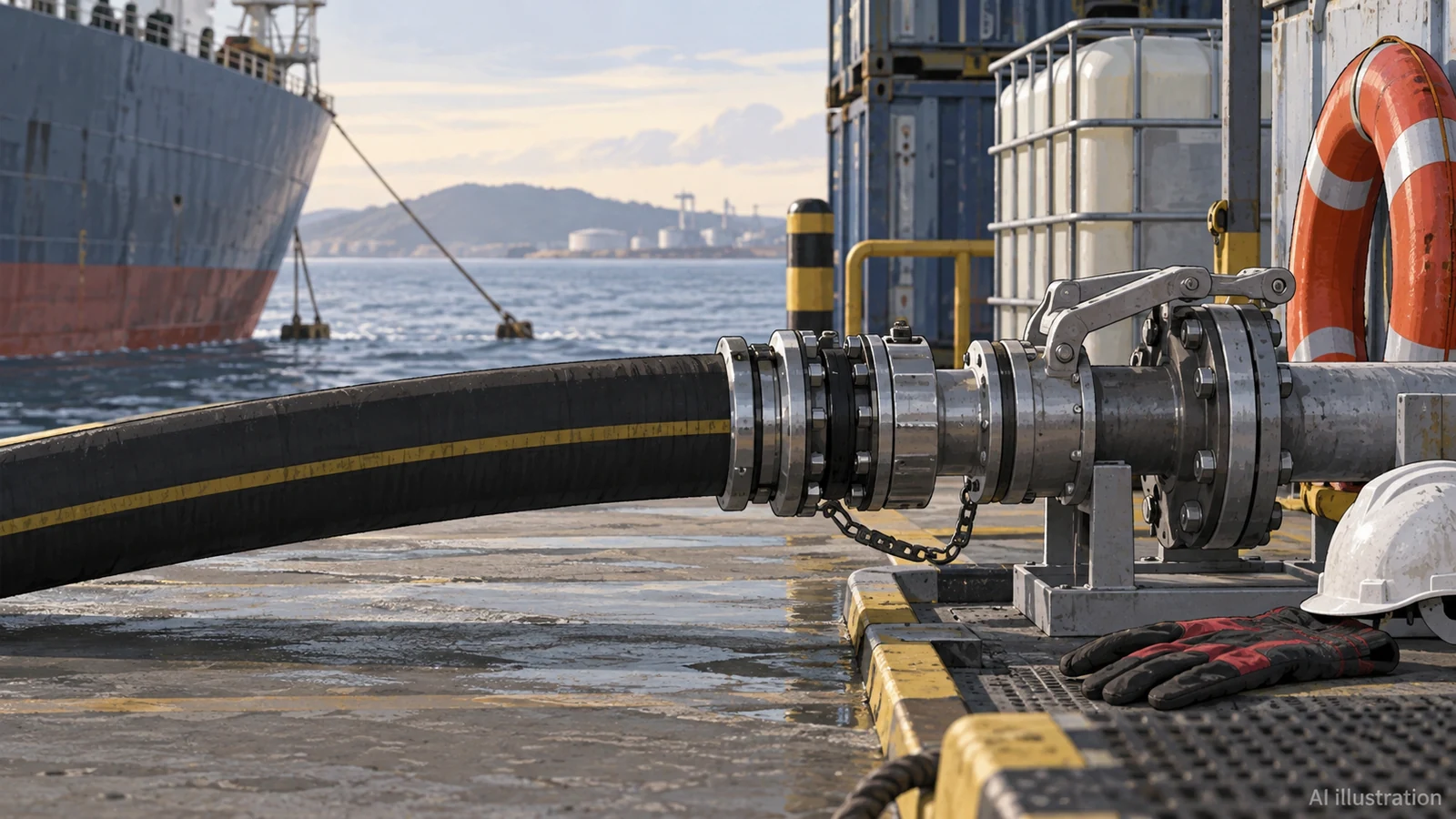
Fuel handling, logistics coordination, procurement and documentation sit behind a visible ship-to-ship or quayside operation. For young people exploring maritime careers, those functions illustrate why technical and commercial knowledge intersect. This is career context, not a claim that the named operation has created vacancies. Actual training and employment opportunities need their own current notices, requirements and application channels.
Check capability against the actual job
For a business planning a port call, a broad description of available services cannot replace direct confirmation for the intended vessel and fuel requirement. A useful enquiry would distinguish availability, scheduling, safety arrangements, quality documentation and contractual responsibility. These are editorial questions for evaluating a service, not operating instructions or terms asserted on behalf of the bureau or the companies mentioned in its account.
Keep the evidence proportional
The reported quantity and method provide a more specific development signal than a general promise of greener shipping. Even so, one operation is not a complete measure of a port's environmental performance or future market share. Readers can recognise the milestone while waiting for independently usable data on recurring services and outcomes. The public update is a source of operational news, not an open subsidy programme or investment recommendation.
Sources and image disclosure
Nansha port green-fuel bunkering update
Reporting is based on the linked official sources, with announcement dates and event dates distinguished in the article. Practical interpretation is editorial analysis, not an additional official promise. Sources were reviewed on 10 October 2026. The cover and contextual image are AI-generated editorial illustrations, not documentary photographs.