
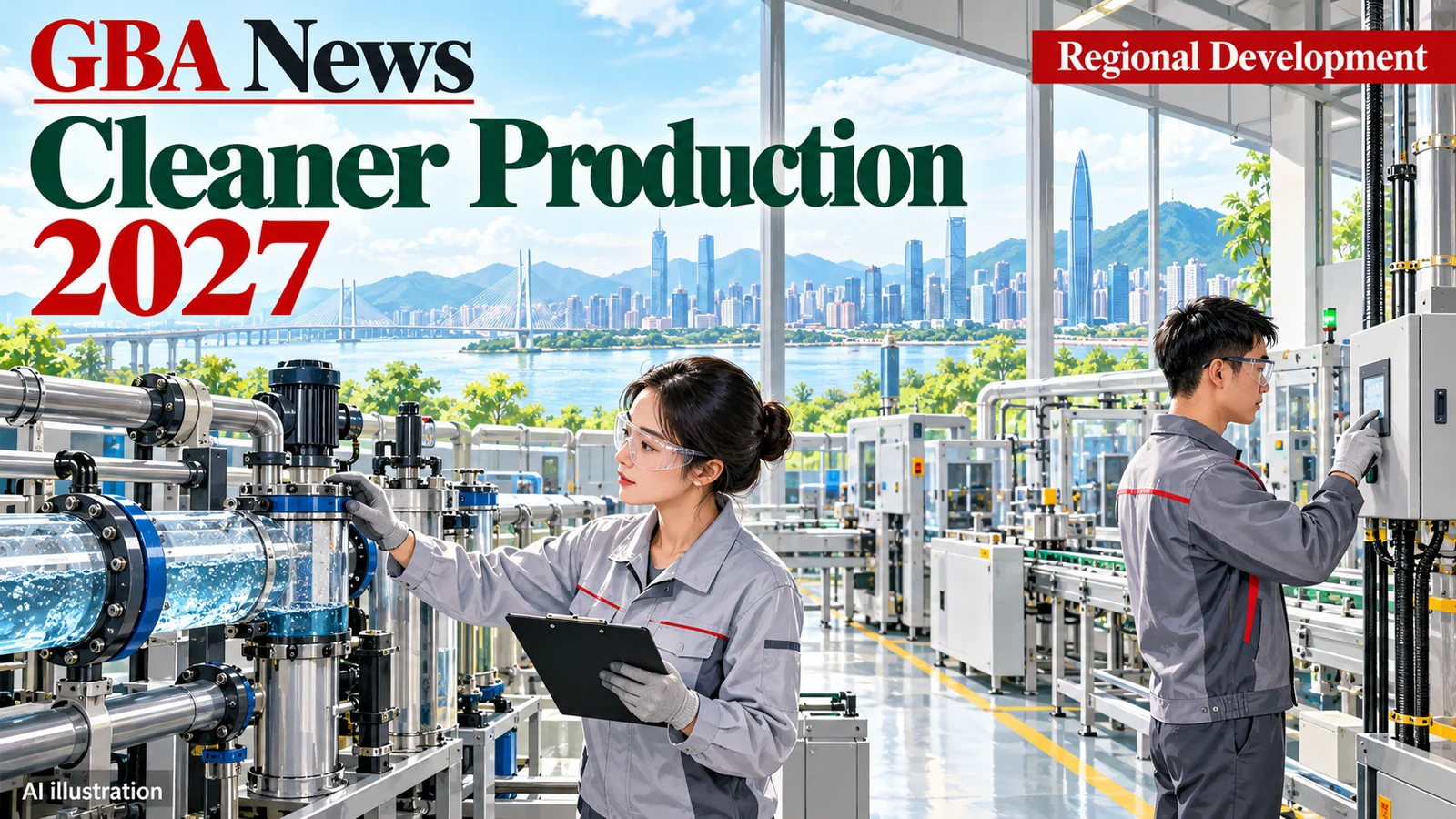
A 27 October meeting approved a 2027 cleaner-production work plan; a separate ceremony recognised 168 enterprises. Neither establishes a new grant round, available quotas or payments.
At a glance
- The joint working group met in Hong Kong on 27 October, reviewed 2026 progress and approved a work plan for 2027.
- The plan continues support for cleaner technologies, production audits and sharing industry experience.
- A separate recognition ceremony commended 168 enterprises; recognition is not evidence of a grant payment.
- The release describes existing funding cooperation but does not establish a fresh application round, available quotas or individual factory eligibility.
A work plan approved on 27 October
Hong Kong and Guangdong approved a cleaner-production work plan for 2027 at their joint working group's 13th meeting in Hong Kong on 27 October. The Environment and Ecology Bureau and Guangdong's Department of Industry and Information Technology reviewed 2026 progress before agreeing next year's cooperation. This is a regional policy decision, not a grant opening on this article's publication date. It establishes neither individual factory approval nor payments to newly recognised enterprises.
Technologies, audits and shared experience
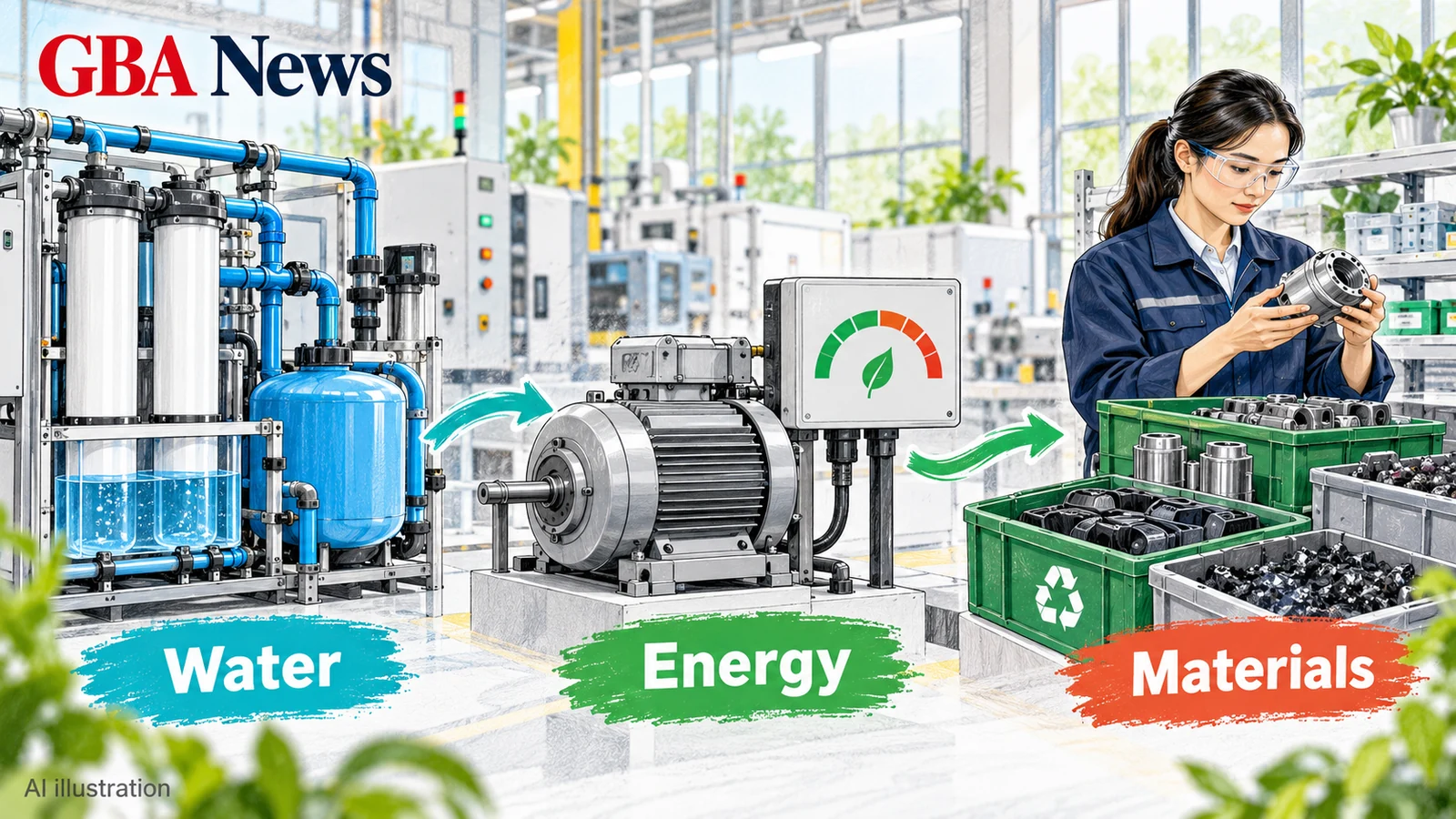
The official release says both sides will continue supporting cleaner production in energy-intensive, polluting and water-intensive industries. It identifies trials of new technologies, cleaner-production audits and publicity activities that share practical experience. The stated aims include saving energy, reducing emissions and consumption, and helping enterprises make a green transition. These are objectives of the work plan, rather than measured results for every participating factory. For readers following industrial development, the distinction matters: identifying a problem, testing an intervention and demonstrating its effect are different steps, and the announcement does not provide project-level evidence for the new plan.
What the 168 recognitions represent
A recognition ceremony held after the meeting commended 168 enterprises as Hong Kong-Guangdong Cleaner Production Partners. The total includes 56 Hong Kong-owned manufacturing enterprises recognised as Excellent Partners, 108 as Partners, one sourcing enterprise and three environmental technology service providers. Those categories show that the ceremony covered different roles in production and its supporting services. They should not be combined into a claim that 168 factories received new grants. The release reports recognition for cleaner-production efforts; it does not state a corresponding payment amount, a new set of funded projects or jobs created by the ceremony.
Two existing schemes have different functions
The Environmental Protection Department and its Guangdong counterpart launched the Cleaner Production Partnership Programme in 2008 to encourage Hong Kong-owned factories in Hong Kong and Guangdong to adopt cleaner technologies and practices. The announcement says the programme has supported more than 4,300 projects to date. That is a cumulative programme figure, not the number of projects newly approved at this meeting. The separate recognition scheme began in 2009 to acknowledge enterprises adopting cleaner production. Funding support and recognition are related parts of the cooperation, but the release does not make one an automatic entitlement to the other.
An amendment agreement, not an application guide
The release also reports that Hong Kong's Secretary for Environment and Ecology and the director-general of Guangdong's industry department signed an amendment to their cleaner-production cooperation agreement during October. Its stated direction is stronger cooperation, wider adoption of new technologies and more green elements in production. The announcement does not give a precise signing day or supply a new application guide. It therefore supports reporting the agreement and its policy purpose, but not inventing a new grant deadline, assuming every Greater Bay Area business qualifies or presenting future intentions as completed factory improvements.
What a factory needs to check separately
For a business considering investment, the official programme site linked from the release is the starting point for checking current application rules. This report does not quote funding percentages, ceilings, quotas, an application closing date or remaining technology places: those require separate current verification, which the meeting announcement cannot supply. As editorial guidance, establish the applicant's eligibility, the exact proposed technology, which costs may qualify and when approval is required before treating prospective support as part of a purchasing budget. An award, supplier proposal or policy headline should not be treated as a reimbursement commitment.
Why the distinction matters to young technical teams
For young engineers and founders, the useful question is how a factory tests an environmental improvement. As editorial analysis, distinguish the production problem, proposed change and evidence used to assess it. The plan's emphasis on audits and technology trials makes those questions relevant; it does not advertise internships, recruitment or personal subsidies. The 30 October source recheck verifies the release's wording, not grant availability or independently measured savings.
Sources and image disclosure
Sources were reviewed on 30 October 2026. Announcement, event and application dates are distinct from this article’s actual publication date. Practical interpretation is editorial analysis, not an official promise. The cover and contextual image are AI-generated editorial illustrations, not documentary photographs.